
PMEGP / PM EGP / PMEGP Scheme
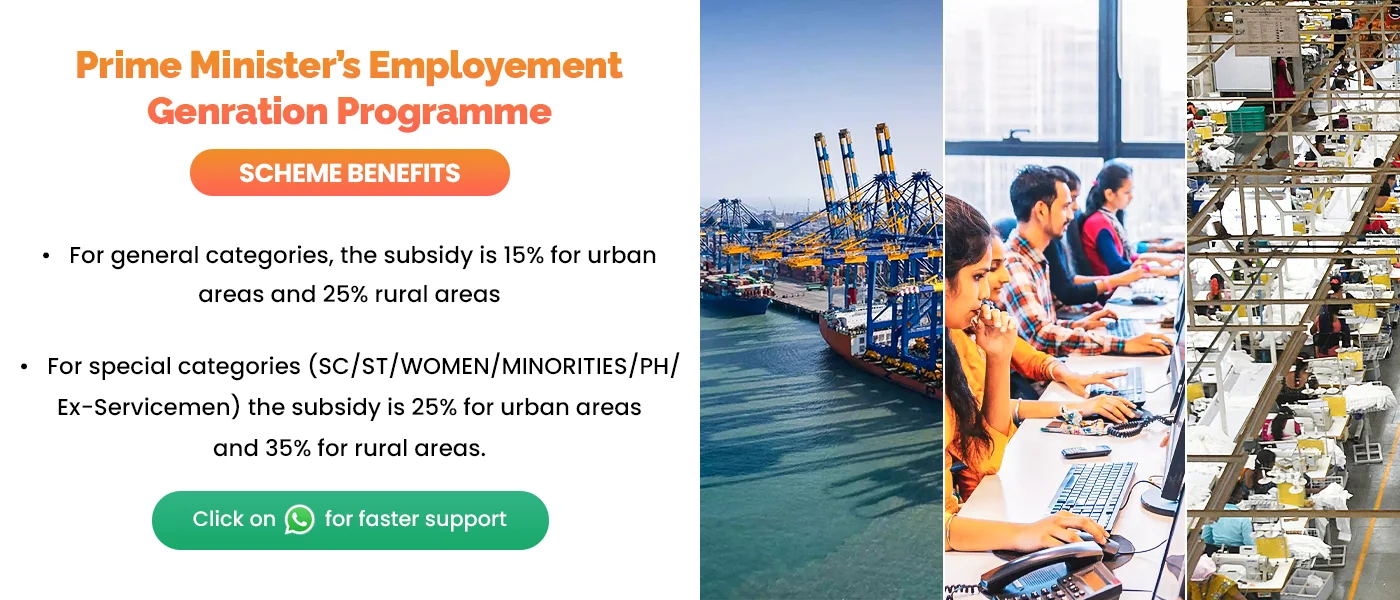
PM EGP is a common typographical or spelling mistake for PMEGP (Prime Minister’s Employment Generation Programme).
PMEGP stands for Prime Minister’s Employment Generation Programme, which is a single term without any spaces.
“PM EGP” is often written due to typing errors or lack of awareness.
The correct usage is PMEGP — always as one complete word.
What is PMEGP?
Introduction and Objective:
PMEGP is a Central Government credit-linked subsidy scheme launched by merging two previous schemes — Prime Minister Rojgar Yojana (PMRY) and Rural Employment Generation Programme (REGP) — during 2008–09.
The primary aim of PMEGP is to create sustainable and continuous employment by encouraging new self-employment ventures and micro-industries in both rural and urban areas.
Who is eligible? (Eligibility Criteria)
- Age: Must be above 18 years.
- Educational Qualification:
- For manufacturing projects costing more than ₹10 lakhs, minimum 8th standard pass is required.
- For business/service projects costing more than ₹5 lakhs, the same educational qualification applies.
- New Projects: Only newly approved projects under PMEGP are eligible; units existing under previous schemes like PMRY, REGP, or other government schemes are not eligible.
- Other eligible groups include:
- Self Help Groups (SHGs), especially excluding BPL families
- Societies registered under Societies Registration Act, 1860
- Production Cooperative Societies
- Charitable Trusts
Financial Assistance – Loan & Subsidy
- Project Cost Limits:
- Manufacturing Sector: Up to ₹50 lakhs
- Business/Service Sector: Up to ₹20 lakhs
- Margin Money Subsidy (Government Grant):
| Beneficiary Category | Urban Area Subsidy | Rural Area Subsidy |
|---|---|---|
| General | 15%% | 25% |
| Special* | 25% | 35% |
- Special category includes SC/ST/OBC, minorities, women, ex-servicemen, differently-abled persons, North Eastern Region (NER), hilly and border areas.
- Project Cost Contribution:
- General Category: 10% own contribution
- Special Category: 5% to 10% own contribution
Important Provisions
- Land Cost: Land expenses are not included in project costs. Only ready-built sheds or leased worksheds/workshops (with lease/rent up to 3 years) are allowed.
- Per Capita Investment Limit: ₹1 lakh in plain areas and ₹1.5 lakhs in hilly areas.
- Negative List: Certain activities like grocery shops, permanent retail shops, farm-related activities (goatery/piggery/poultry), and vehicle businesses (except certain bikes and tourist boats) are not eligible for assistance.
- Loan Interest Differential: The government covers the difference between the actual bank lending rate and 4% through KVIC to banks.
Approval and Application Process
- Implementing Agencies:
- Central level: KVIC (Khadi and Village Industries Commission)
- State and district levels: State KVIC Directorates, KVIBs, District Industries Centres (DICs), Coir Board.
- Application Method:
- Online via KVIC e-portal
- Offline by submitting Detailed Project Report (DPR) and documents at local offices.
- Documents Required:
- Proof of age, education, caste/community certificate (if applicable for special category), project details, constitution/bye-laws of Society/Trust/MFI (where applicable).
- For any doubts, contact your local bank or DIC/KVIC office.
Summary for Right Decision
- PMEGP is an excellent option if you want to start a new self-employment venture.
- Financial assistance is available for projects costing ₹25–50 lakhs in manufacturing and ₹10–20 lakhs in service sectors.
- Higher subsidy rates are provided for special categories (Rural: up to 35%, Urban: up to 25%).
- Applications can be processed through KVIC at the center, KVIB & DIC at state levels.
- Both online and offline application methods are available.